
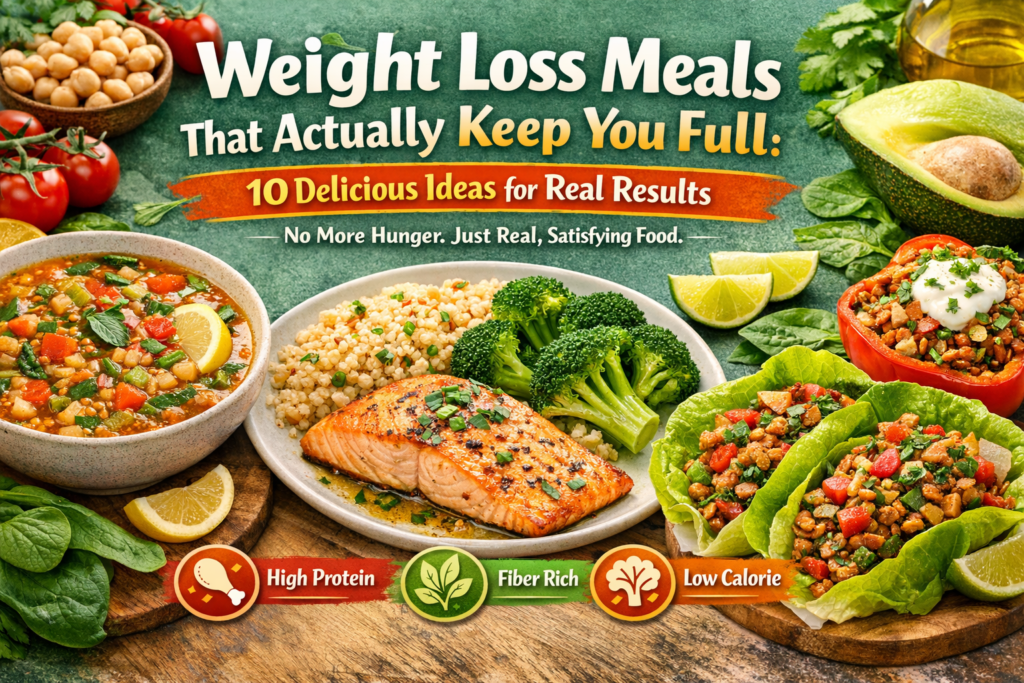
Let’s be completely honest about something that most weight loss advice gets wrong. The biggest reason diets fail isn’t lack of willpower. It’s not laziness. It’s not even the occasional treat. The real reason most people give up on eating healthy is far simpler — they’re hungry all the time, and eating feels like punishment.
Here’s what nobody tells you clearly enough: weight loss doesn’t require suffering. It doesn’t require tiny portions, bland food, or constant calorie anxiety. What it requires is the right food — meals that are strategically built to keep you full, fuel your body, and naturally reduce the amount you eat without you even thinking about it.
The smartest nutrition approach for 2026 focuses on balance — the right amount of protein alongside fiber-rich whole foods, with an emphasis on lean meats, low-fat dairy, nuts, and legumes over processed protein products MyFitnessPal. When you eat this way, weight loss stops feeling like a battle against your hunger and starts feeling effortless.
This guide gives you 10 genuinely delicious, completely halal-friendly weight loss meals — each one designed around the science of satiety, built to keep you satisfied for hours, and easy enough to make on any weeknight.
The Science Behind Meals That Help You Lose Weight
Before the recipes, a quick look at why certain meals support weight loss better than others — because when you understand the principles, you can apply them to everything you cook.
Protein is your best friend. Research shows that people who eat high-protein meals consume significantly less food by weight at subsequent meals compared to those who eat high-carb, low-protein meals — the effect on satiety is measurable and consistent Healthline. Protein takes longer to digest, triggers fullness hormones more effectively, and requires more energy to metabolize than carbohydrates or fat.
Fiber is the new secret weapon. Dietitians are calling fiber “the new protein” for 2026 — predicting it will emerge as a mainstream weight loss tool as people discover its extraordinary power for satiety, blood sugar regulation, and sustainable fat loss MyFitnessPal. Foods rich in fiber slow digestion, stabilize energy levels, and physically fill your stomach — meaning you genuinely eat less without trying.
Volume eating changes everything. The principle of volume eating — filling your plate with high-bulk, low-calorie foods that physically occupy space in your stomach — helps you feel satisfied on fewer total calories, eliminating the deprivation that kills most diets Zing Coach. A plate that looks generous and satisfying beats a tiny plate of calorie-dense food every single time for long-term adherence.
Armed with these three principles, here are 10 meals built around all of them.
10 Weight Loss Meals That Are Actually Satisfying
1. Spiced Lentil and Vegetable Soup
Lentils are arguably the single greatest weight loss food available in any supermarket. Because of their exceptional protein and fiber content, legumes like lentils have been shown to increase feelings of fullness by up to 31% more than high-carb meals based on pasta or bread Healthline — and they cost almost nothing.
This soup uses red or green lentils as the protein-fiber base, then loads in vegetables for massive volume at minimal calories. A large, deeply satisfying bowl comes in well under 350 calories.
How to make it: Sauté one large diced onion, three garlic cloves, and two diced carrots in a teaspoon of olive oil until softened. Add one cup of rinsed lentils, a can of diced tomatoes, one liter of vegetable broth, one teaspoon of cumin, half a teaspoon of turmeric, a pinch of chili flakes, and salt to taste. Bring to a boil, then simmer for 25–30 minutes until the lentils are completely tender and the soup has thickened. Finish with a squeeze of lemon juice and a handful of fresh spinach stirred in just before serving.
Why it works for weight loss: The combination of lentil protein, lentil fiber, and the high water content of the broth and vegetables creates an extraordinary satiety effect. You will not be hungry two hours after eating this bowl.
Pro tip: Make a double batch — this soup stores in the fridge for 4 days and freezes perfectly for up to 3 months. Having it ready is a powerful defense against reaching for fast food on busy evenings.
Approximate calories: 300–340 per serving
2. Grilled Chicken and Roasted Vegetable Bowl
Simple, protein-packed, and infinitely customizable — the grilled chicken bowl is the backbone of almost every successful weight loss eating plan. The secret is in the roasted vegetables, which provide enormous volume for almost no calories.
How to make it: Season chicken breast with garlic powder, smoked paprika, cumin, salt, and a drizzle of olive oil. Grill or bake at 200°C (400°F) for 20–22 minutes until fully cooked through and golden. Meanwhile, toss a large tray of chopped zucchini, bell peppers, cherry tomatoes, and red onion with a tiny drizzle of olive oil and your favorite spices. Roast at 220°C (425°F) for 20–25 minutes until caramelized and tender. Serve the sliced chicken over the vegetables with a generous spoonful of hummus on the side.
Why it works for weight loss: Chicken breast is one of the leanest, highest-protein foods available — around 31 grams of protein per 100 grams for just 158 calories. The roasted vegetables fill your plate visually and physically while adding barely any caloric load. Roasting a large tray of vegetables like zucchini or broccoli can create a massive, flavor-packed side dish for under 200 calories — filling half your plate and naturally displacing more calorie-dense foods Zing Coach.
Pro tip: Roast a full tray of mixed vegetables at the start of the week and keep them in the fridge. They can be added to bowls, wraps, eggs, and soups all week long — cutting your daily prep time to almost nothing.
Approximate calories: 380–420 per serving
3. Overnight Oats with Chia and Fresh Fruit
Weight loss starts at breakfast — and overnight oats built with the right ingredients create a morning meal so filling that most people find they’re genuinely not hungry until well past midday.
Oats made with chia seeds deliver up to 13 grams of fiber per serving — leaving you extra satiated and providing slow-release energy that stabilizes blood sugar and prevents the mid-morning hunger crashes that lead to snacking on the wrong things Eat This!.
How to make it: Combine half a cup of rolled oats with one tablespoon of chia seeds, one cup of oat or skimmed milk, half a teaspoon of cinnamon, and a teaspoon of honey in a jar or bowl. Stir well, cover, and refrigerate overnight. In the morning, top with fresh berries, sliced banana, and a teaspoon of nut butter. The texture will be thick, creamy, and perfectly ready to eat cold.
Why it works for weight loss: Oats contain beta-glucan, a specific type of soluble fiber that forms a thick gel in the digestive tract, dramatically slowing digestion and creating powerful, prolonged fullness. Combined with the omega-3 fatty acids and additional fiber in chia seeds, this breakfast is a hunger-management powerhouse in a jar.
Pro tip: Prepare five jars on Sunday evening and keep them in the fridge all week. Breakfast is handled for the entire week in under 10 minutes of prep — and you’re never tempted to skip it or grab something less healthy.
Approximate calories: 350–390 per serving
4. Baked Salmon with Steamed Broccoli and Quinoa
This is your go-to weight loss dinner for nights when you want something that feels genuinely indulgent but is working hard for your body the entire time. Salmon, broccoli, and quinoa form one of the most nutritionally complete weight loss combinations possible.
How to make it: Season salmon fillets with lemon zest, garlic, a pinch of chili flakes, and a light brush of olive oil. Bake at 200°C (400°F) for 12–15 minutes until just cooked through and flaking. Steam a large head of broccoli cut into florets for 5–6 minutes until bright green and tender-crisp. Cook quinoa in vegetable broth according to package directions. Plate the quinoa as the base, add the broccoli, and lay the salmon on top. Drizzle with tahini mixed with lemon juice and a little water to make a light sauce.
Why it works for weight loss: Salmon provides about 40 grams of high-quality protein per fillet while its healthy fats — omega-3 fatty acids — have been shown to reduce inflammation and support fat metabolism. Quinoa is a complete protein in its own right, adding both amino acids and fiber. And broccoli delivers exceptional fiber and volume for almost zero caloric cost.
Pro tip: Make extra quinoa — it stores in the fridge for up to 5 days and can form the base of multiple different meals throughout the week, making weight loss eating dramatically easier and more varied.
Approximate calories: 450–490 per serving
5. Chickpea and Spinach Stew
This is the kind of meal that makes people genuinely surprised that plant-based eating can be this satisfying. Chickpeas are extraordinary for weight loss — high in both protein and fiber, deeply filling, and remarkably versatile.
How to make it: Sauté one large diced onion with four minced garlic cloves and a thumb of grated fresh ginger in a little olive oil until golden and fragrant. Add one teaspoon each of cumin, coriander, and turmeric, and half a teaspoon of smoked paprika. Stir for one minute until the spices bloom. Add two cans of drained chickpeas, one can of crushed tomatoes, and 200ml of vegetable broth. Simmer for 20 minutes until thick and saucy. Stir in a large bag of fresh baby spinach and let it wilt for 2–3 minutes. Season with salt, pepper, and a squeeze of lemon. Serve with a small portion of brown rice or warm wholemeal flatbread.
Why it works for weight loss: One cup of cooked chickpeas provides approximately 15 grams of fiber and 15 grams of protein for around 270 calories — making them one of the most fiber-and-protein-dense foods per calorie on earth. The spinach adds iron, vitamins, and additional volume with essentially zero caloric cost.
Pro tip: Finish the stew with a teaspoon of good quality olive oil and a pinch of chili flakes just before serving. The healthy fat helps your body absorb the fat-soluble vitamins in the spinach and spices — a small step that meaningfully increases the nutritional value of the entire meal.
Approximate calories: 360–400 per serving
6. Turkey and Zucchini Lettuce Wraps
When you want something light, fast, and lower in carbohydrates without any sense of restriction, lettuce wraps are the answer. Using large iceberg or butter lettuce leaves instead of bread or tortillas cuts carbs and calories significantly while actually increasing the crunch and freshness of every bite.
How to make it: Brown 400g of lean ground turkey in a hot pan with a teaspoon of sesame oil, three minced garlic cloves, and a teaspoon of fresh grated ginger. Add one diced zucchini and cook for 3–4 minutes until softened. Season with soy sauce, a drizzle of honey, and a pinch of chili flakes. Stir until everything is coated in the sauce and the liquid has reduced. Spoon the filling into large, cold lettuce leaf cups. Top with shredded carrot, sliced cucumber, fresh mint, and a squeeze of lime juice.
Why it works for weight loss: Ground turkey is one of the leanest protein sources available — leaner even than chicken breast in many cuts — delivering excellent protein at a very low caloric cost. The lettuce wraps themselves are essentially calorie-free while providing satisfying crunch and freshness that makes eating these feel genuinely pleasurable rather than restrictive.
Pro tip: Make a double portion of the turkey filling and use it in different ways throughout the week — as a topping for rice bowls, stuffed inside wholemeal pitta bread, or scrambled into eggs for a high-protein breakfast.
Approximate calories: 280–320 per serving
7. Egg White and Vegetable Frittata
Eggs are one of the most researched satiety foods on the planet — studies consistently show that people who eat eggs at breakfast consume significantly fewer calories throughout the rest of the day. Using egg whites alongside a couple of whole eggs increases the protein content dramatically while keeping calorie counts very low.
How to make it: Preheat your oven to 190°C (375°F). In an oven-safe skillet, sauté a diced red onion, two minced garlic cloves, a large handful of cherry tomatoes halved, and a large handful of baby spinach in a teaspoon of olive oil until wilted and fragrant. Season well. Whisk together three whole eggs and four egg whites, then pour over the vegetables. Cook on the stovetop for 2–3 minutes until the edges begin to set, then transfer the skillet to the oven and bake for 12–15 minutes until the frittata is fully set, puffed, and lightly golden on top. Slice into wedges and serve with a simple green salad.
Why it works for weight loss: This frittata provides an exceptional protein-to-calorie ratio — high protein, high volume, generous portions, and a calorie count that leaves plenty of room in your daily budget for other meals. The vegetables add fiber and visual bulk, making each serving look and feel substantial.
Pro tip: A frittata stores well in the fridge for 3–4 days and is excellent eaten cold, making it one of the best weight loss meal prep options in your repertoire. Slice it up, store it in portions, and grab a slice whenever hunger strikes.
Approximate calories: 220–260 per serving
8. Cauliflower Fried Rice with Chicken
The cauliflower rice swap is one of the most genuinely effective volume eating strategies for weight loss. A three-cup serving of cauliflower rice contains just 60 calories compared to over 600 calories for the same volume of regular white rice The Big Man’s World — making it possible to enjoy a completely satisfying, heaped plate of “fried rice” for a fraction of the usual caloric cost.
How to make it: Pulse a large head of cauliflower in a food processor until it resembles rice grains, or grate it on a box grater. In a large wok or pan over very high heat, stir-fry diced chicken breast until cooked through, then set aside. In the same pan, cook diced onion, minced garlic, and grated ginger for 2 minutes. Add the cauliflower rice and stir-fry on high heat for 3–4 minutes. Push everything to the sides and scramble two eggs in the centre. Add the cooked chicken back, season with soy sauce, a pinch of five-spice, and toasted sesame seeds. Top with sliced spring onions and serve immediately.
Why it works for weight loss: The combination of very high volume (a huge, heaped plate), lean protein from the chicken, and the near-zero caloric contribution of the cauliflower rice creates a meal that feels indulgent and generous while remaining well within a calorie deficit.
Pro tip: Make the cauliflower rice in large batches and freeze it in portions. Frozen cauliflower rice cooks even faster than fresh — directly from frozen in a hot pan in under 5 minutes.
Approximate calories: 300–350 per serving
9. Mediterranean Tuna and White Bean Salad
This no-cook meal is one of the fastest, most nutritionally impressive weight loss options in existence. It requires zero cooking time, uses pantry staples, and delivers an extraordinary combination of protein and fiber in a meal that takes ten minutes to assemble.
How to make it: Drain one large can of tuna in water and one can of white cannellini beans. Combine in a large bowl with halved cherry tomatoes, sliced cucumber, thin-sliced red onion, a handful of fresh flat-leaf parsley, and a small handful of olives. Make the dressing by whisking together two tablespoons of extra virgin olive oil, the juice of one lemon, half a teaspoon of Dijon mustard, salt, and black pepper. Pour over the salad and toss well. Serve immediately or refrigerate for up to a day.
Why it works for weight loss: Tuna provides around 25 grams of protein per can for just 100–120 calories — an almost unbeatable protein-to-calorie ratio. The cannellini beans add another 15 grams of protein and a remarkable 15 grams of fiber per cup. Combined, this salad is one of the most filling meals per calorie that exists in the culinary world.
Pro tip: Add half a ripe avocado, sliced, to the salad for healthy fats that slow digestion even further and transform this from a light meal into something genuinely substantial and deeply satisfying.
Approximate calories: 370–410 per serving
10. Vegetable and Lentil Stuffed Peppers
Stuffed peppers are a weight loss secret weapon — they look spectacular, taste deeply satisfying, and deliver everything a great weight loss meal needs: protein, fiber, volume, and genuine flavor.
How to make it: Cut four large bell peppers in half lengthways and remove the seeds. Brush lightly with olive oil and bake at 200°C (400°F) for 15 minutes until slightly softened. Meanwhile, cook half a cup of green or brown lentils in vegetable broth until tender — about 20 minutes. Sauté diced onion, garlic, diced courgette, and chopped mushrooms in a little olive oil until softened. Combine with the cooked lentils, a tablespoon of tomato purée, cumin, smoked paprika, salt, and pepper. Fill the pepper halves generously with the lentil mixture. Return to the oven for 20 minutes until the peppers are tender and the filling is golden. Top with a spoonful of Greek yogurt and fresh herbs.
Why it works for weight loss: The pepper itself provides zero-calorie structure that makes the portion look impressively large. The lentil and vegetable filling is extraordinarily high in fiber and plant protein. And the Greek yogurt topping adds a cooling creaminess along with an additional protein boost that rounds the meal out beautifully.
Pro tip: Make extra filling and store it separately in the fridge. It works wonderfully as a topping for baked potatoes, a filling for wraps, or stirred into a quick soup throughout the week.
Approximate calories: 320–360 per serving
The Weight Loss Plate Formula That Actually Works
Every meal in this guide follows the same fundamental structure — and once you understand it, you can apply it to anything you cook:
Half your plate: non-starchy vegetables (broccoli, spinach, zucchini, peppers, tomatoes, cucumbers) — these provide fiber, volume, vitamins, and minerals for almost zero calories
A quarter of your plate: lean protein (chicken breast, fish, turkey, eggs, legumes) — this is what keeps you full, preserves muscle, and keeps your metabolism active during weight loss
A quarter of your plate: complex carbohydrates (quinoa, brown rice, sweet potato, lentils, wholemeal bread) — these provide sustained energy and additional fiber without the blood sugar spikes of refined carbs
A small amount: healthy fats (olive oil, avocado, tahini, nuts) — these are not the enemy; healthy fats slow digestion, help absorb fat-soluble vitamins, and make meals genuinely satisfying
Follow this formula consistently, and you’ll naturally create the calorie deficit needed for steady, sustainable weight loss — without hunger, without deprivation, and without ever feeling like you’re on a diet.
Simple Habits That Multiply Your Results
Great meals are the foundation — but a few supporting habits make everything significantly more effective:
Eat slowly and chew properly. Your brain takes about 20 minutes to register fullness from your stomach. Eating slowly and putting your fork down between bites gives this signal time to arrive — preventing overeating by a significant margin.
Start meals with vegetables or soup. Studies show that eating soup before a main meal reduces total calorie intake at that meal by up to 20% Healthline — simply by beginning to fill the stomach before the higher-calorie portions arrive.
Stay hydrated. Thirst is frequently misread as hunger. Drinking a large glass of water 20–30 minutes before each meal genuinely reduces overall food intake and supports the body’s fat-burning processes.
Meal prep your proteins. Having cooked chicken, boiled eggs, or prepared lentils in the fridge at all times means that building a satisfying, weight-loss-friendly meal takes minutes instead of an hour — removing the biggest practical barrier to eating well on busy days.
Don’t fear hunger — learn to distinguish it. Physical hunger builds gradually and is satisfied by any nutritious food. Emotional or boredom hunger arrives suddenly and craves specific comfort foods. Recognizing the difference is one of the most powerful tools in long-term weight management.
Final Thoughts
The 10 meals in this guide share a common thread: none of them feel like diet food. They’re flavorful, generous, satisfying, and genuinely enjoyable to eat. That’s not an accident — it’s the entire point.
The most effective weight loss approach in 2026 is built around whole food sources — lean meats, legumes, dairy, nuts, and seeds — eaten in meals that are balanced, satisfying, and sustainable for the long term MyFitnessPal. Not crash diets. Not meal replacements. Not calorie-counting misery. Just real, delicious food that keeps you full and lets your body do what it’s naturally designed to do.
Start with one or two meals from this list. Build the habit. Notice how different it feels to be genuinely full and satisfied rather than perpetually counting down the minutes until your next meal. Then build from there — meal by meal, week by week — until eating this way stops feeling like effort and starts feeling simply like the way you eat.
That’s when the real, lasting results begin. And they’re much closer than you think.
Leave a Reply