
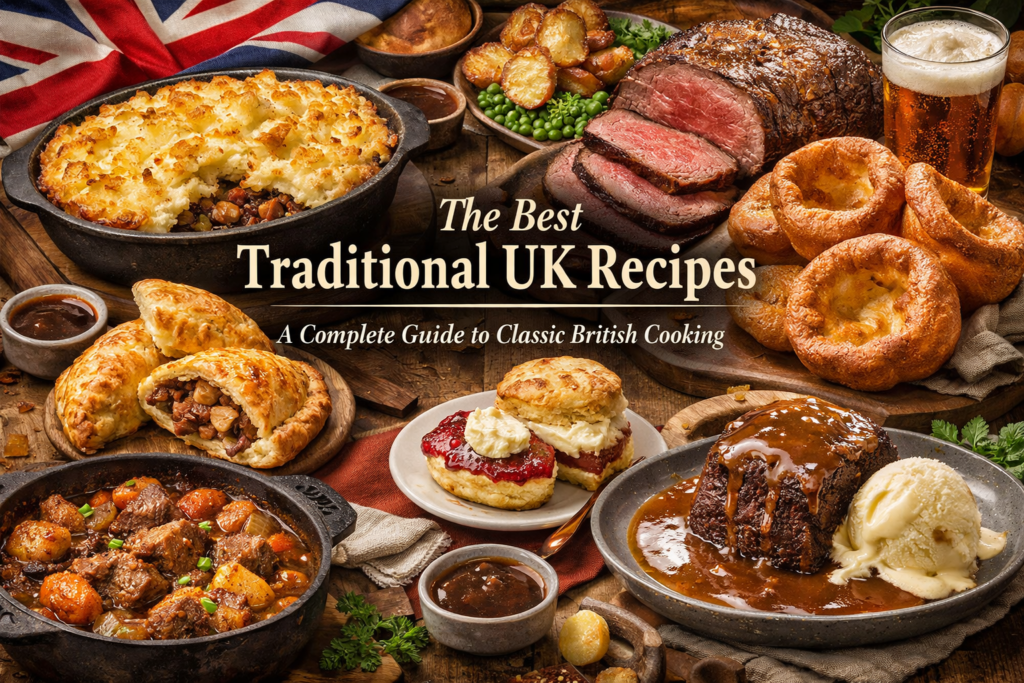
There is a persistent and spectacularly wrong idea that British food is boring. That it consists of overcooked vegetables, grey meat, and puddings best left in the past. Whoever started this rumor has clearly never eaten a perfect shepherd’s pie fresh from the oven, its mashed potato crown golden and crispy, the lamb filling bubbling with rich, herby gravy beneath. They have never broken through the caramelized sugar crust of a proper sticky toffee pudding. They have never pulled apart a freshly baked Cornish pasty in the cold air of a seaside town and eaten it with the wind in their face.
British food, at its best, is some of the most genuinely satisfying cooking on earth. It is food built for cold evenings and long tables and the company of people you love. It is food with centuries of history in every bite — practical, honest, deeply flavored, and completely unpretentious.
In 2026, traditional and nostalgic British meals are experiencing a powerful global comeback — with diners and home cooks actively craving classics like beef stew, shepherd’s pie, and Yorkshire pudding, driven by a deep desire for comfort, familiarity, and the warmth of dishes rooted in genuine culinary heritage National Geographic.
This guide takes you through the very best traditional UK recipes — from the iconic Sunday roast to the humble but magnificent bangers and mash, from the showstopping Beef Wellington to the soul-warming sticky toffee pudding — with full step-by-step instructions, pro tips, and everything you need to cook brilliant British food at home.
Understanding British Cooking: Honest Food with Deep Roots
Before the recipes, a little context about what makes British food distinctively itself.
Traditional British food is about comfort, flavour, and history — hearty roasts, humble puddings, and dishes built around the principle of making excellent, deeply satisfying food from good, honest ingredients treated with patience and care British Food Crew.
British cuisine reflects a landscape of rolling green fields, grey coastal skies, and a culture that has always valued warmth, generosity, and the social power of a shared meal. The great dishes of the UK — the slow-braised stews, the crispy roast potatoes, the golden pastry pies — are all expressions of that character. They take time. They fill the kitchen with extraordinary aromas. And they bring people to the table without fail.
The British store cupboard is simple but effective: good beef stock, Worcestershire sauce, dried thyme and rosemary, bay leaves, plain flour for thickening and pastry, butter used generously, whole milk for custards and batters, and golden syrup for the darker, richer desserts. With these staples in place, you can make almost every dish in this guide.
A note on halal adaptation: Every recipe in this guide can be made completely halal-friendly with simple ingredient swaps — using halal-certified beef, lamb, and chicken; omitting or substituting beer and ale with good quality beef or vegetable broth; and using halal sausages in recipes that call for them. The results are completely authentic in flavor.
1. The Perfect Sunday Roast with Yorkshire Puddings
Every Sunday, families gather around a table laden with roast beef, lamb, chicken, or turkey, served with crispy roast potatoes, seasonal vegetables, and the undisputed star of the show — Yorkshire pudding, a golden, puffed-up batter made from eggs, flour, and milk, perfect for soaking up properly made gravy British Food Crew.
The Sunday roast is not simply a meal. It is a British institution. It is the meal that brings families home, that anchors the week, and that consistently tops every survey about the nation’s favourite dishes. Getting it right is one of the most satisfying achievements in home cooking.
Ingredients (serves 6):
For the roast chicken (halal-certified):
- 1 large whole chicken (approximately 2kg)
- 50g unsalted butter, softened
- 6 garlic cloves, minced
- Zest of 1 lemon
- 2 tsp dried thyme
- 2 tsp dried rosemary
- Salt and generous black pepper
- 1 whole lemon, halved (for the cavity)
- 1 head of garlic, halved across the middle
For the roast potatoes:
- 1.5kg Maris Piper or King Edward potatoes, peeled and cut into large chunks
- 4 tbsp vegetable oil or goose fat
- Salt and fresh thyme leaves
For the Yorkshire puddings:
- 3 large eggs
- 150ml whole milk
- 150ml cold water
- 150g plain flour
- Half tsp salt
- Vegetable oil for the tins
For the gravy:
- Chicken roasting juices
- 600ml good chicken stock
- 2 tbsp plain flour
- 1 tbsp Worcestershire sauce
- Salt and pepper
How to make it:
Remove the chicken from the fridge 1 hour before roasting — a cold chicken cooks unevenly. Preheat the oven to 200°C (400°F). Mix the softened butter with garlic, lemon zest, thyme, rosemary, salt, and pepper to make a flavored butter. Gently loosen the skin over the chicken breast with your fingers and push generous amounts of the butter under the skin directly onto the breast meat. Rub remaining butter all over the outside. Place the halved lemon and halved garlic head inside the cavity for flavoring. Place in a roasting tin and roast for 1 hour 30 minutes, basting every 30 minutes with the pan juices. The chicken is ready when the juices run completely clear when the thigh is pierced.
For perfect roast potatoes, peel and cut the potatoes into large, even chunks. Parboil in well-salted water for 12–15 minutes until just beginning to soften at the edges — they should look slightly fluffy on the outside. Drain and shake vigorously in the colander to rough up the surfaces — this creates the cragged edges that become extraordinarily crispy. Heat the oil or fat in a large roasting tray in the oven for 10 minutes until smoking. Carefully add the potatoes, turning to coat in the hot fat. Roast for 45–50 minutes, turning twice, until deeply golden, shatteringly crispy on the outside, and fluffy within.
For the Yorkshire puddings — make the batter first and let it rest. Whisk the eggs, milk, water, flour, and salt together until completely smooth with no lumps. Rest for at least 30 minutes at room temperature — this crucial resting period allows the gluten to relax and produces a better rise. When ready to cook, place a muffin tin with a small amount of oil in each hole in the oven at 220°C (425°F) for 10 minutes until the oil is smoking hot. Working very quickly, pour the batter into the hot oil until each hole is two-thirds full. Return immediately to the oven and bake for 20–25 minutes without opening the door. They will rise dramatically, become deeply golden, and puff magnificently. Do not open the oven door during cooking — this collapses the puddings.
For the gravy, pour off excess fat from the chicken roasting tin, leaving the dark cooking juices behind. Place the tin over medium heat on the stovetop. Add the flour and stir constantly for 2 minutes, scraping up all the caramelized bits. Gradually pour in the chicken stock, whisking continuously to prevent lumps. Add Worcestershire sauce and simmer for 5–8 minutes until the gravy reaches a rich, coating consistency. Season generously.
Pro tip: The Yorkshire pudding batter must go into smoking-hot oil — the temperature shock on contact is what causes the dramatic, immediate rise. Even slightly cool oil produces flat, oily, disappointing puddings. Heat the tin until wisps of smoke appear before you add the batter.
Serve with: Roasted carrots and parsnips, steamed broccoli, cauliflower cheese, and the puddings and gravy alongside.
2. Shepherd’s Pie — The Ultimate British Comfort Dish
Shepherd’s pie is traditional British comfort food at its finest — minced lamb, onions, carrots, and peas all cooked in rich gravy and topped with creamy mashed potatoes, then baked until beautifully golden brown. Originally created as a way to use leftovers, it is now one of the most beloved staple dishes in British homes and pubs coffeethecanvas.
Ingredients (serves 6):
For the filling:
- 800g minced lamb (or beef for cottage pie)
- 2 large onions, finely diced
- 3 medium carrots, finely diced
- 3 celery stalks, finely diced
- 4 garlic cloves, minced
- 200g frozen peas
- 2 tbsp tomato paste
- 2 tbsp Worcestershire sauce
- 400ml good beef or lamb stock
- 1 tbsp plain flour
- 2 tbsp vegetable oil
- 1 tsp dried thyme
- 1 bay leaf
- Salt and generous black pepper
For the mashed potato topping:
- 1.2kg Maris Piper potatoes, peeled and cubed
- 80g unsalted butter
- 100ml warm whole milk
- 50g mature cheddar cheese, grated (optional but wonderful)
- Salt, white pepper, and freshly grated nutmeg
How to make it:
Heat the oil in a large, deep ovenproof pan over high heat. Add the minced lamb and cook, breaking it up constantly, until deeply browned and caramelized — about 8–10 minutes. Do not add salt yet and do not crowd the pan — proper browning of the meat is where most of the dish’s flavor is built. Season, then drain any excess fat.
Reduce heat to medium. Add the onion, carrot, and celery to the meat and cook for 8 minutes until the vegetables have softened and begun to sweeten. Add the garlic and tomato paste and cook for 2 minutes. Sprinkle over the flour and stir for 1 minute. Pour in the stock and Worcestershire sauce, add the thyme and bay leaf, and stir well. Bring to a simmer and cook uncovered for 20 minutes, stirring occasionally, until the sauce has thickened to a rich, glossy gravy that coats the meat generously. Stir in the frozen peas in the final 2 minutes. Remove the bay leaf. Taste and adjust seasoning — be generous.
For the mashed potato topping, boil the potatoes in well-salted water until completely tender. Drain thoroughly and return to the warm pan. Mash until completely smooth — use a potato ricer for the silkiest, most restaurant-quality result. Beat in the butter and warm milk until the mash is luxuriously creamy, fluffy, and smooth. Season with salt, white pepper, and a tiny grating of nutmeg.
Preheat the oven to 200°C (400°F). Transfer the meat filling to a large baking dish. Spoon the mashed potato over the top in large dollops, then spread evenly to the edges, creating a sealed lid over the filling. Use a fork to create ridges across the surface — these will catch the heat and turn deliciously crispy and golden. Scatter over the grated cheese if using. Bake for 25–30 minutes until the top is deeply golden, the edges are bubbling, and the filling is piping hot throughout.
Pro tip: Let the shepherd’s pie rest for 10 minutes before serving. This settling time allows the filling to firm up slightly, making it far easier to serve in clean, beautiful portions rather than collapsing into a puddle on the plate.
3. Classic Beef and Ale Stew
This is British cooking at its most honest and magnificent — chunks of braising beef slow-cooked with root vegetables in a deep, dark, ale-enriched broth until the meat is so tender it falls apart at the gentlest touch and the broth has reduced to something that tastes like the distilled essence of comfort itself.
Beef and ale stew is one of the classic dishes that research confirms diners are craving most powerfully in 2026 — a nostalgic, deeply comforting dish that captures everything people are looking for in a time of comfort food renaissance National Geographic.
For the halal version, simply replace the ale with a combination of rich beef stock and a tablespoon of pomegranate molasses, which provides the same deep, slightly bitter complexity.
Ingredients (serves 6):
- 1.2kg beef chuck or braising steak, cut into 5cm cubes
- 3 medium onions, roughly chopped
- 4 large carrots, cut into thick chunks
- 3 parsnips, cut into thick chunks
- 4 garlic cloves, minced
- 2 tbsp tomato paste
- 600ml rich beef stock
- 200ml dark, non-alcoholic beef stock (or pomegranate molasses + extra stock for halal version)
- 2 tbsp plain flour
- 3 tbsp vegetable oil
- 2 tbsp Worcestershire sauce
- 1 tbsp pomegranate molasses (adds beautiful depth)
- 2 sprigs fresh thyme
- 2 bay leaves
- 1 tsp dried rosemary
- Salt and generous black pepper
- Fresh parsley to serve
- Crusty bread or creamy mash to accompany
How to make it:
Preheat the oven to 160°C (320°F). Toss the beef cubes with the flour, salt, and pepper until every surface is coated. Heat 2 tablespoons of oil in a large, heavy-bottomed casserole dish or Dutch oven over high heat. Brown the beef in batches — never crowding the pan — for 4 minutes per side until deeply caramelized on all surfaces. This is the most important step: proper browning creates the Maillard reaction that builds the stew’s foundational flavor. Set each browned batch aside.
Add the remaining oil to the pan and reduce heat to medium. Cook the onions for 8 minutes until golden and softened. Add the garlic and tomato paste, stirring constantly for 2 minutes until the paste darkens and becomes fragrant. Pour in the stock, Worcestershire sauce, and pomegranate molasses, scraping every caramelized bit from the bottom of the pot. Return the browned beef to the pot with the thyme sprigs, bay leaves, and rosemary. The liquid should just barely cover the meat — add a splash more stock if needed.
Bring to a gentle simmer on the stovetop, then transfer to the oven. Cook covered for 1 hour 30 minutes. Add the carrots and parsnips, re-cover, and cook for a further 45 minutes until the beef is completely, meltingly tender and the vegetables are cooked through. Taste and adjust seasoning generously. Remove the thyme sprigs and bay leaves. Scatter with fresh parsley and serve directly from the pot with crusty bread or creamy mashed potatoes.
Pro tip: This stew is significantly better the day after it is made — overnight refrigeration allows the flavors to deepen and meld completely. Reheat gently on the stovetop, adding a splash of stock if the gravy has thickened too much. The flavors will be more complex, deeper, and more unified than the day before.
4. Cornish Pasties — The Original Portable British Meal
The Cornish pasty was the original portable lunch for miners in Cornwall — a golden pastry filled with beef, potatoes, onions, and swede (rutabaga), with its thick crimped edge allowing it to be held with dirty hands underground while keeping the filling piping hot British Food Crew. Today, the traditional recipe is so treasured it carries protected status — and making them at home from scratch is one of the most rewarding British baking projects imaginable.
Ingredients (makes 6 large pasties):
For the shortcrust pastry:
- 500g strong plain flour
- 125g cold butter, cubed
- 125g solid white vegetable fat (or all butter for a richer result), cubed
- 150–175ml ice-cold water
- 1 tsp salt
For the filling:
- 400g beef skirt or chuck steak, cut into very small 1cm cubes — never mince
- 300g waxy potatoes (Desiree or Charlotte), peeled and very thinly sliced
- 200g swede (rutabaga), peeled and very thinly sliced
- 1 large onion, very finely diced
- Salt and generous black pepper
- 1 egg, beaten (for egg wash)
How to make it:
The pastry comes first and must be cold throughout. Combine the flour and salt in a large bowl. Rub in the cold butter and vegetable fat until the mixture resembles rough, slightly clumpy breadcrumbs — some larger butter pieces are fine and will create flakiness. Add the ice-cold water gradually, mixing with a butter knife until the dough just comes together — do not knead or overwork it. Wrap in cling film and refrigerate for at least 1 hour.
For the filling, combine the beef cubes, sliced potato, sliced swede, and diced onion in a bowl. Season very generously with salt and black pepper — traditional Cornish pasties are well-seasoned and the filling is layered raw, cooking inside the pastry. Do not add any liquid or binding agent — the vegetables release their own moisture during cooking, steaming the beef and creating a self-contained filling.
Preheat the oven to 200°C (400°F). Divide the pastry into 6 equal portions. Roll each portion on a lightly floured surface to a circle approximately 25cm in diameter and 3mm thick. Pile the filling generously onto one half of each pastry circle, leaving a 2cm border clear. Fold the pastry over the filling to create a half-moon shape. Press the edges firmly together. To create the traditional Cornish crimp — the distinctive rope-like edge — fold and twist the sealed edge over itself in a continuous series of overlapping folds from one end to the other.
Place on lined baking trays, brush with beaten egg, and bake for 45–50 minutes until deeply golden all over. The filling will have steamed and cooked completely inside the pastry.
Pro tip: The filling must be raw when it goes into the pastry — do not pre-cook it. The cooking process inside the sealed pastry creates a steaming environment that perfectly cooks the beef and vegetables simultaneously while keeping all the flavors and juices locked inside the pastry shell.
5. Bangers and Mash with Onion Gravy
Bangers and mash — a quintessential British pub dish — is a simple yet profoundly satisfying combination of sausages and mashed potatoes that represents exactly the kind of honest, hearty cooking at which British cuisine excels Foodandtravelutsav. The real secret of this dish is in two places: the quality of the sausages and the depth of the onion gravy.
Ingredients (serves 4):
- 8 good quality halal beef or lamb sausages
- 1.2kg Maris Piper potatoes, peeled and cubed
- 80g butter
- 100ml warm whole milk
- Salt, white pepper, and nutmeg
For the onion gravy:
- 3 large onions, very thinly sliced
- 2 tbsp butter
- 1 tbsp plain flour
- 600ml good beef stock
- 1 tbsp Worcestershire sauce
- 1 tsp soft brown sugar
- Salt and pepper
How to make it:
Begin with the onion gravy as it needs the most time. Melt the butter in a wide, heavy pan over medium-low heat. Add the thinly sliced onions with a good pinch of salt and the brown sugar. Cook very slowly for 35–40 minutes, stirring every 5–8 minutes, until the onions have completely collapsed and turned a beautiful deep golden caramel. This slow caramelization cannot be rushed — the natural sugars in the onions need time to develop into that sweet, jammy, complex flavor that makes British onion gravy so extraordinary.
Once the onions are deeply caramelized, increase heat slightly. Sprinkle over the flour and stir for 2 minutes. Pour in the stock and Worcestershire sauce in a steady stream, stirring constantly to prevent lumps. Bring to a simmer and cook for 10 minutes until the gravy is rich, glossy, and coats the back of a spoon. Season generously.
Cook the sausages in a frying pan over medium heat for 15–18 minutes, turning regularly, until deeply golden all over and cooked completely through. Resist the urge to prick the sausages — keeping the casing intact retains all the juices and fat inside.
For the mash, boil the potatoes in well-salted water until completely tender. Drain thoroughly. Mash or rice until smooth. Beat in the butter and warm milk until luxuriously creamy. Season with salt, white pepper, and a tiny grating of nutmeg.
Serve the mash in a generous mound, arrange the sausages alongside, and ladle the dark, silky onion gravy over everything.
Pro tip: The quality of your sausages defines this dish. Choose the best halal beef or lamb sausages available — ones with a high meat content and natural skins. Cheap sausages with high cereal content will shrink, burst, and produce a watery result that no amount of good gravy can rescue.
6. Lancashire Hotpot — A Northern English Classic
Lancashire Hotpot, a slow-cooked stew originating from the northwest of England, is a true testament to the resourcefulness and creativity of British cooking — layers of lamb, potatoes, onions, and sometimes carrots all cooked together in a flavorful broth, topped with beautifully sliced potatoes baked until golden and crispy Foodandtravelutsav.
Ingredients (serves 6):
- 900g lamb shoulder, cut into 3cm chunks
- 800g waxy potatoes, peeled and very thinly sliced (approximately 3mm)
- 2 large onions, thinly sliced
- 3 medium carrots, sliced
- 600ml lamb or beef stock
- 2 tbsp Worcestershire sauce
- 2 tbsp vegetable oil
- 1 tsp dried thyme
- 2 bay leaves
- Salt and generous black pepper
- 25g butter (for finishing)
How to make it:
Preheat the oven to 170°C (340°F). Heat the oil in a large casserole dish over high heat. Season the lamb pieces generously and brown in batches — 3 minutes per side — until well coloured. Set aside. In the same pot, cook the sliced onions for 8 minutes over medium heat until softened and lightly golden. Return the lamb to the pot with the carrots, thyme, bay leaves, Worcestershire sauce, and stock. Bring to a simmer.
Now arrange the thinly sliced potatoes in overlapping circles across the top of the stew, completely covering the surface in neat, tight layers. Season the potato topping generously with salt and pepper. Dot the surface with small pieces of butter.
Cover the casserole tightly with a lid and bake for 1 hour 30 minutes. Remove the lid, increase the oven temperature to 200°C (400°F), and bake for a further 30 minutes until the potato topping is crispy, deeply golden, and magnificently burnished. The contrast between the crispy potato top and the tender, succulent lamb below is what makes this dish so quietly extraordinary.
Pro tip: Slice the potatoes on a mandoline or very sharp knife to an absolutely even 3mm thickness. Uneven slices cook at different rates — some burning while others remain underdone. Consistent thickness is the difference between a beautiful, evenly golden top and a patchy, inconsistent one.
7. Toad in the Hole — Britain’s Most Beloved Comfort Bake
Despite its wonderfully peculiar name, toad in the hole contains neither amphibians nor mystery — just plump sausages baked in a dramatic Yorkshire pudding batter until puffed, golden, and irresistibly crispy. Toad in the hole is a homey, satisfying British dish made by baking sausages in Yorkshire pudding batter until puffed and golden, and is deeply beloved in British households for its simplicity and extraordinary rich flavor coffeethecanvas.
Ingredients (serves 4):
- 8 halal beef or lamb sausages
- 3 large eggs
- 150ml whole milk
- 150ml cold water
- 150g plain flour
- Half tsp salt
- 3 tbsp vegetable oil
- Onion gravy to serve (recipe above)
- Fresh thyme leaves
How to make it:
Make the batter first: whisk the eggs, milk, water, flour, and salt together until completely smooth. Add the fresh thyme leaves. Rest the batter for at least 30 minutes at room temperature — this is not optional and produces a significantly better rise.
Preheat the oven to 220°C (425°F). Place the oil in a large, deep roasting tin and heat in the oven for 10 minutes until smoking hot. Meanwhile, cook the sausages in a frying pan for 5 minutes to colour them slightly — partially cooking them ensures they cook through completely inside the batter.
Working very quickly, remove the roasting tin from the oven and place the sausages in the smoking oil. Return to the oven for 5 minutes. Remove again and immediately pour the rested batter around the sausages in one confident pour — the batter will sizzle dramatically when it hits the hot oil, which is exactly what you want. Return immediately to the oven and bake for 25–30 minutes without opening the door until the batter has risen dramatically, is deeply golden brown on the edges, and the sausages are visible through the puffed batter like toads peering through the surface.
Serve immediately — like Yorkshire puddings, toad in the hole deflates quickly once removed from the oven. Pour hot onion gravy generously over the top at the table.
Pro tip: The tin must be screaming hot and the oil must be smoking before the batter goes in. The violent, immediate sizzle when cold batter hits hot oil creates the steam that makes the batter rise explosively. A lukewarm tin produces flat, dense results.
8. Sticky Toffee Pudding — Britain’s Most Famous Dessert
Sticky toffee pudding is gooey, rich, comforting, and unashamedly indulgent — a moist sponge cake made with dates, drenched in buttery toffee sauce, and served with custard or vanilla ice cream. Originally from the Lake District, it is now a staple on pub dessert menus nationwide and quite possibly the best-loved British dessert in the world British Food Crew.
Ingredients (serves 8):
For the sponge:
- 200g Medjool dates, pitted and roughly chopped
- 250ml boiling water
- 1 tsp bicarbonate of soda
- 80g unsalted butter, softened
- 180g soft dark brown sugar
- 2 large eggs
- 200g self-raising flour
- 1 tsp vanilla extract
For the toffee sauce:
- 200g soft dark brown sugar
- 150ml heavy cream
- 80g unsalted butter
- 1 tsp vanilla extract
- Generous pinch of sea salt flakes
To serve:
- Vanilla ice cream, clotted cream, or warm custard
How to make it:
Preheat the oven to 180°C (350°F) and grease a deep 20cm square baking tin generously. Place the chopped dates in a bowl and pour over the boiling water. Add the bicarbonate of soda — it will fizz vigorously. Stir and leave to soak for 10 minutes until the dates have completely softened and absorbed most of the liquid.
Beat the soft butter and brown sugar together for 4 minutes until light and fluffy. Add the eggs one at a time, beating well after each addition. Add the vanilla extract. Gently fold in the flour until just combined. Mash the softened date mixture with a fork until roughly pureed — some texture is desirable. Fold the date mixture into the batter until evenly incorporated.
Pour into the prepared tin and bake for 30–35 minutes until the sponge has risen, set, and springs back when gently pressed in the centre. A skewer inserted should come out with just moist crumbs, not wet batter.
While the sponge bakes, make the toffee sauce: combine the butter, brown sugar, and cream in a saucepan over medium heat. Stir until the butter melts, then bring to a gentle simmer and cook for 4–5 minutes, stirring regularly, until the sauce thickens to a glossy, flowing caramel. Add the vanilla and sea salt.
When the sponge comes out of the oven, immediately pierce it all over with a skewer and pour half the toffee sauce slowly over the surface — it will absorb into the warm sponge, making it incredibly moist and deeply flavored throughout. Reserve the remaining sauce for serving.
Serve warm in generous squares with the remaining toffee sauce poured over and vanilla ice cream or clotted cream alongside.
Pro tip: Sticky toffee pudding can be made completely 2–3 days ahead and reheated — it actually improves with time. Reheat individual portions in a microwave for 60–90 seconds, then pour warm toffee sauce over immediately before serving. It is consistently even more magnificent the second day.
9. Eton Mess — Summer in a Glass
Eton Mess is Britain’s most joyful, most effortless, and most spectacularly named dessert — a glorious tumble of crushed meringue, lightly whipped cream, and fresh strawberries that takes under 10 minutes to assemble and consistently delights everyone who encounters it. It was reportedly created when a Labrador sat on a packed picnic basket at Eton College, demolishing the strawberry pavlova within — and the happy accident became a British classic.
Ingredients (serves 6):
- 500g fresh ripe strawberries, hulled
- 300ml cold heavy cream
- 2 tbsp icing sugar
- 1 tsp vanilla extract
- 200g ready-made meringue nests, roughly crushed (or homemade)
- Fresh mint leaves to garnish
How to make it:
Slice two-thirds of the strawberries and toss with 1 tablespoon of icing sugar. Let them macerate for 15 minutes — the sugar draws out the juice and deepens the flavor. Blend the remaining third of the strawberries with 1 tablespoon of icing sugar until smooth for a quick strawberry sauce.
Whip the cold cream with the vanilla and a pinch of icing sugar until it holds soft, billowing peaks — do not overwhip into stiff peaks, which gives Eton Mess a heavy, buttery texture. The cream should be just-holding, softly romantic.
Now assemble with deliberate abandon — the point of Eton Mess is its beautiful, romantic disorder. In a large bowl or individual glasses, fold together the macerated strawberries and their juices with the crushed meringue pieces and the whipped cream, leaving the layers only partially combined so you can see all three elements distinctly. Drizzle the strawberry sauce over the top and garnish with fresh mint leaves.
Serve immediately — Eton Mess is at its best in the first 20 minutes before the meringue begins to soften too much into the cream.
Pro tip: The balance of textures is everything in Eton Mess. You need crispy meringue, soft cream, and juicy strawberries all in the same spoonful. Crush the meringue into pieces of varying sizes — some fine crumbs that dissolve into the cream, some medium shards, and some larger pieces that stay distinctly crunchy. This variation in texture makes every bite genuinely interesting.
10. Classic British Scones with Clotted Cream and Jam
No guide to traditional British recipes would be complete without the scone — the centerpiece of the great British institution of afternoon tea. Light, golden, gently buttery, and best eaten still warm from the oven with an embarrassingly generous spread of clotted cream and good strawberry jam — scones are the most perfectly simple British baking achievement.
Ingredients (makes 12 scones):
- 450g self-raising flour, plus extra for dusting
- 2 tsp baking powder
- Pinch of salt
- 1 tsp caster sugar
- 85g cold unsalted butter, cubed
- 300ml cold whole milk, plus extra for brushing
- 1 tsp vanilla extract
To serve:
- Clotted cream
- Good strawberry or raspberry jam
How to make it:
Preheat the oven to 220°C (425°F) and line a large baking tray with parchment paper. Combine the flour, baking powder, salt, and sugar in a large bowl. Add the cold butter cubes and rub into the flour using your fingertips until the mixture resembles rough, slightly clumpy breadcrumbs. Work quickly to keep everything cold — warm butter produces flat, greasy scones rather than light, layered ones.
Make a well in the centre. Mix the vanilla into the cold milk, then pour it into the well. Using a round-bladed knife or pastry scraper, cut the liquid into the flour mixture with swift, cutting motions — never stir or mix, which develops the gluten and makes tough scones. As soon as the dough just comes together, stop. It should look rough and slightly shaggy.
Turn out onto a lightly floured surface. With one or two gentle pats, bring it together into a disc approximately 2.5cm thick — handle it as little as possible. Using a 6cm round cutter dipped in flour, cut straight down without twisting — twisting seals the edges and prevents the scone from rising straight. Press the offcuts gently back together to cut more scones.
Place on the prepared tray, brush the tops with milk, and bake for 12–14 minutes until well-risen and deep golden. Cool briefly on a rack — they should be eaten warm.
The great cream tea debate: In Devon, the cream goes on first, then the jam. In Cornwall, the jam goes on first, then the cream. This disagreement has divided the nation for centuries and shows no signs of resolution. Try both methods and decide for yourself.
Pro tip: The scone dough must be handled as minimally as possible. Every extra knead or fold develops gluten and makes the scones tougher and denser. The rougher and more lightly handled the dough, the lighter and more tender the finished scone. Restraint is the most important ingredient.
The British Kitchen: Essential Techniques for Success
Across all 10 recipes in this guide, a few universal principles guarantee the best results:
Brown your meat properly and patiently. British stews and braises are built on the deep caramelized flavor of well-browned meat. Rushing this stage — undercrowding the pan, keeping the heat high, not moving the meat until it releases — is the foundation of every great British slow-cooked dish.
Season generously at every stage. British cooking uses simple ingredients and allows them to speak — which means seasoning must be confident and layered. Season the meat before browning, season the vegetables as they cook, and adjust at the end. Under-seasoning is the most common reason British food disappoints.
Respect resting time. Whether it is Yorkshire pudding batter resting before it goes into the oven, a shepherd’s pie resting before serving, or a scone dough handled as briefly as possible, British recipes consistently reward patience. These resting periods are active parts of the recipe, not idle waiting.
Use the best ingredients your budget allows. Traditional British cooking uses hearty flavors, herbs, gravy, and slow-cooked ingredients for deep taste — and the quality of those core ingredients makes an enormous difference to the final result British Food Crew. Good stock, fresh vegetables, quality meat, and real butter transform ordinary recipes into extraordinary ones.
Final Thoughts
British food is food with soul. It is food that has fed a nation through centuries of cold winters and long working days, food that has gathered families around tables for Sunday after Sunday, food that carries the warmth of tradition in every spoonful.
The powerful return of traditional British recipes in 2026 speaks to something deeper than mere nostalgia — it reflects a genuine hunger for meals that feel grounding, meaningful, and made with real care in a world that moves too fast National Geographic.
The 10 recipes in this guide give you the complete spectrum of British cooking — from the grandeur of the Sunday roast to the quiet pleasure of a warm scone with clotted cream, from the robust comfort of Lancashire hotpot to the pure indulgence of sticky toffee pudding. Each one is a genuine classic, tested by generations, and beloved for exactly the reasons that food should be loved.
Cook the shepherd’s pie this weekend. Make the Yorkshire puddings on Sunday. Bake the scones on a quiet afternoon. Let the beef stew fill your kitchen with the kind of smell that makes everyone wander in from other rooms asking what is for dinner.
Because British food, at its very best, does not just nourish the body. It warms the whole house.
Bon appétit — or as the British would say, rather more sensibly: tuck in.
Leave a Reply