
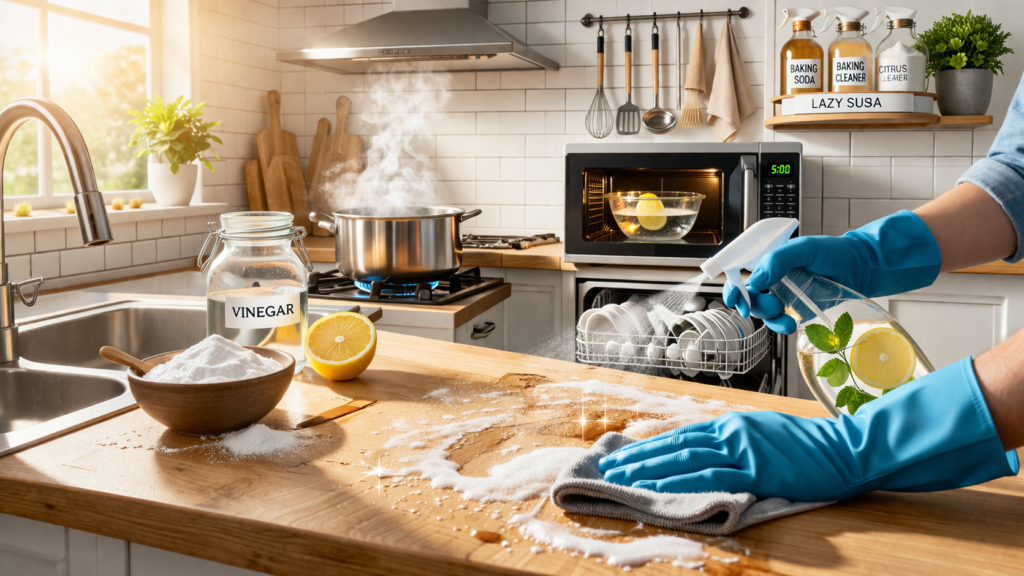
Let’s be honest — nobody wakes up excited to scrub a greasy stovetop or dig baked-on residue out of the oven. Kitchen cleaning is one of those tasks that, if you don’t have the right approach, can turn a 20-minute job into a two-hour ordeal. But it doesn’t have to be that way. With the right kitchen cleaning hacks, you can cut your cleaning time dramatically, skip the harsh chemicals, and keep your kitchen looking spotless with far less effort than you’re probably spending right now.
This guide covers the smartest, most effective kitchen cleaning tips — from natural ingredient tricks that cost almost nothing to clever methods for tackling the surfaces and appliances that give home cooks the most trouble. Whether you’re doing a quick daily clean or a thorough deep-clean before reorganizing your kitchen, these hacks will make the whole process faster, more effective, and a lot less painful.
Why Smarter Cleaning Beats Harder Cleaning Every Time
The traditional approach to kitchen cleaning involves a lot of scrubbing, strong chemical sprays, and elbow grease. The smarter approach works differently — it uses the right method for each surface, allows cleaning agents to do the heavy lifting (so you don’t have to), and prevents grime from building up in the first place.
According to the Good Housekeeping Institute, one of the most common kitchen cleaning mistakes people make is wiping surfaces immediately after applying a cleaner — before the product has had any time to work. Letting cleaners sit is half the battle, and it applies to both commercial products and natural alternatives like baking soda and white vinegar.
With that principle in mind, let’s go zone by zone through your kitchen and tackle each area with purpose.
Stovetop Cleaning Hacks — Cut Through Grease in Minutes
The stovetop is the single most-used surface in any kitchen, and it shows. Grease splatters, boiled-over liquids, and burnt food residue accumulate fast. Here’s how to handle it without spending half your evening scrubbing.
The dish soap and baking soda paste method
Mix two tablespoons of baking soda with a few drops of dish soap to form a thick paste. Apply it directly to your stovetop burners, grates, or ceramic surface, and let it sit for at least 15 minutes — longer for heavy buildup. The baking soda gently abrades while the soap cuts through grease, making it easy to wipe clean with a damp cloth. No harsh scouring pads needed.
Steam cleaning for ceramic and glass tops
For flat glass or ceramic stovetops, place a hot, damp towel directly on the surface and leave it for five minutes. The steam loosens burnt-on food so it lifts off with minimal effort. Follow with your baking soda paste for any stubborn spots.
Daily maintenance rule
The single best stovetop hack is the simplest: wipe it down after every cooking session while it’s still slightly warm (not hot). Thirty seconds of wiping now prevents thirty minutes of scrubbing later.
Pro tip: Line your drip pans with aluminum foil and replace it periodically — this alone eliminates the worst stovetop cleanup task entirely.
Oven Cleaning — The Natural Overnight Method
Oven cleaning is the task most people dread — and most often put off until it becomes a serious problem. Commercial oven cleaners are harsh, strongly scented, and require significant ventilation. Here’s a natural method that does the same job overnight while you sleep.
- Remove the oven racks and soak them in hot soapy water in your sink or bathtub.
- Mix half a cup of baking soda with enough water to form a spreadable paste.
- Spread the paste across the interior surfaces of the oven, avoiding the heating elements. Pay extra attention to areas with visible grease or burnt residue.
- Leave the paste overnight — ideally for 10 to 12 hours.
- The next morning, wipe out as much of the dried paste as possible with a damp cloth.
- Fill a spray bottle with undiluted white vinegar and spritz the remaining baking soda residue. It will foam on contact, which is exactly what you want — that reaction lifts the remaining grime.
- Wipe clean with a fresh damp cloth.
This method, recommended by The Spruce, works as well as most commercial oven cleaners for regular maintenance cleaning and is completely free of toxic fumes.
Microwave Cleaning — The Two-Minute Steam Trick
A splattered microwave interior is one of the quickest things to make a kitchen look uncared-for. Most people scrub it with a cloth and spray, fighting dried food that refuses to budge. There’s a much better way.
Place a microwave-safe bowl filled with one cup of water and a few tablespoons of white vinegar inside your microwave. Run it on high for five minutes, then leave the door closed for an additional two minutes to let the steam work. When you open the door, all the splattered food will have softened completely and wipes off with a single damp cloth. The vinegar also neutralizes any lingering food odours at the same time.
For a pleasant scent instead, add a few slices of lemon to the water in place of vinegar. The result is a spotless, fresh-smelling microwave in under ten minutes with zero scrubbing. This is one of those smart kitchen strategies that once you try, you’ll never go back from.
Cutting Board Hacks — Sanitize and Deodorize Naturally
Cutting boards — whether wooden or plastic — are one of the most bacteria-prone surfaces in your kitchen. They need more than a quick rinse. Here are two hacks that properly clean and deodorize them using ingredients you already have.
Salt and lemon scrub for wooden boards
Sprinkle coarse salt generously over the surface of your wooden cutting board. Cut a lemon in half and use the cut side to scrub the salt across the board in circular motions. The salt acts as a natural abrasive while the lemon’s acidity breaks down bacteria and neutralizes odours. Rinse thoroughly and allow to air dry upright. According to FDA food safety guidelines, wooden cutting boards should also be sanitized periodically with a diluted bleach solution (one tablespoon of bleach per gallon of water) for raw meat surfaces.
Baking soda paste for plastic boards
Plastic cutting boards can be scrubbed with a paste of baking soda and water to remove stains and odours. For deep sanitizing, plastic boards are dishwasher-safe — run them through a hot cycle regularly.
Sink and Drain Hacks — Fresh and Clear in Minutes
A grimy, smelly sink can undermine the feel of an otherwise clean kitchen. These quick hacks keep your sink spotless and your drain flowing freely.
Baking soda and vinegar drain refresh
Once a week, pour half a cup of baking soda directly down your drain, followed immediately by half a cup of white vinegar. Let the fizzing reaction work for 10 minutes, then flush with a full kettle of boiling water. This clears minor buildup, deodorizes the drain, and keeps things flowing — without any chemical drain cleaners.
Stainless steel sink polish
After cleaning your stainless steel sink, dry it completely and buff it with a tiny amount of baby oil or mineral oil on a paper towel. This removes water spots, restores the shine, and leaves a protective layer that repels future water marks. It takes about 60 seconds and makes your sink look freshly installed.
Garbage disposal deodorizer
Freeze white vinegar in an ice cube tray and run a few of the frozen vinegar cubes through your garbage disposal weekly. The ice sharpens the blades while the vinegar sanitizes and deodorizes simultaneously — a two-in-one hack that takes seconds.
Refrigerator Cleaning Hacks — Keep It Fresh with Less Effort
The refrigerator is one of those appliances that gets cleaned reactively — usually only when something spills or starts to smell. A better strategy is a quick monthly wipe-down that prevents buildup from ever becoming a problem.
- Shelf liners: Line your fridge shelves with removable, washable liners or even paper towels. When something spills, you remove the liner rather than scrubbing the shelf. Replace or wash as needed.
- Baking soda for odours: Keep an open box of baking soda on a fridge shelf to absorb ongoing food odours. Replace it every 30 days.
- Wipe-down solution: Mix equal parts water and white vinegar in a spray bottle for a natural, food-safe fridge cleaner. It cuts through residue and leaves no chemical smell or residue behind.
- Rubber seal cleaning: Wipe the rubber door seal with a damp cloth dipped in baking soda to remove the mould and grime that accumulates there — this is one of the most overlooked spots in any kitchen clean.
The team at Real Simple recommends a full refrigerator clean-out at least once a month — a habit that also helps you stay on top of what food you have and dramatically reduces waste.
Quick-Win Daily Cleaning Hacks
Beyond the big jobs, the real secret to a consistently clean kitchen is a set of small daily habits that prevent mess from building up in the first place. These take almost no time but make a dramatic difference.
Hack 01
Clean as you cook
While something is on the stove or in the oven, use that idle time to wash the bowls and tools you’ve already used. By the time dinner is served, your kitchen is already half-clean.
Hack 02
The two-minute rule
If a cleaning task takes less than two minutes — wiping a counter, rinsing a pan, putting away a tool — do it immediately. Delayed small tasks compound into large ones.
Hack 03
Keep a spray bottle on the counter
A spray bottle of your all-purpose cleaner (vinegar and water works perfectly) sitting on or near the counter means you’ll actually use it regularly instead of reaching under the sink every time.
Hack 04
Empty the dishwasher in the morning
An empty dishwasher means dirty dishes go straight in rather than sitting in the sink. This one habit keeps your sink cleaner than almost any other single action.
For additional strategies on running a more efficient kitchen day-to-day, explore our guide to smart meal prep habits that work hand in hand with an organized, clean kitchen.
Natural Cleaning Ingredients Every Kitchen Should Have
A fully stocked cleaning kit doesn’t require an expensive arsenal of branded products. The most effective natural kitchen cleaners are incredibly affordable and already in most homes.
- White vinegar: A natural disinfectant, deodorizer, and grease cutter. Diluted 50/50 with water, it’s your all-purpose spray for counters, appliances, and the fridge.
- Baking soda: A gentle abrasive that removes stains, neutralizes odours, and reacts with vinegar to lift stubborn grime. Invaluable for ovens, sinks, and drains.
- Dish soap: Excellent for cutting through grease when added to water or combined with baking soda into a paste.
- Lemon: A natural antibacterial agent with a fresh scent. Use on cutting boards, in the microwave steam bowl, or to deodorize a garbage disposal.
- Coarse salt: A natural abrasive for scrubbing cutting boards, pans, and cast iron without damaging surfaces.
Frequently Asked Questions
What is the fastest way to clean a greasy kitchen?
Start with a hot, damp cloth to wipe down all surfaces first. Then spray with a diluted dish soap or vinegar solution, let it sit for 2–3 minutes, and wipe clean. Tackling grease while it’s fresh — before it hardens — cuts cleaning time by more than half.
Is white vinegar safe to use on all kitchen surfaces?
White vinegar is safe on glass, stainless steel, ceramic tile, and most countertop materials. Avoid using it on natural stone surfaces like marble or granite, as its acidity can etch and damage the finish over time.
How do I get rid of cooking smells in my kitchen?
Simmer a pot of water with lemon slices, cinnamon sticks, and cloves for 15–20 minutes. This naturally refreshes the air. Keeping an open box of baking soda in your fridge and using the vinegar-water microwave steam trick regularly also helps manage lingering food odours.
How often should I deep clean my kitchen?
A full kitchen deep clean — including oven, fridge, inside cabinets, and drains — should be done every one to three months depending on how frequently you cook. Light daily and weekly maintenance reduces how intensive those deep cleans need to be.
What is the most overlooked kitchen cleaning spot?
The rubber door seal on the refrigerator is consistently the most forgotten. It accumulates mould and food residue quickly and is rarely wiped down. Clean it monthly with a baking soda paste to keep it hygienic and functional.
Conclusion
A clean kitchen doesn’t come from cleaning harder — it comes from cleaning smarter. By using the right methods for each surface, leaning on natural ingredients that genuinely work, and building a handful of small daily habits, you can maintain a spotless kitchen with a fraction of the time and effort most people spend. Start with one or two of these hacks today, work them into your routine, and you’ll wonder how you ever cleaned any other way. Your kitchen — and your future self — will thank you.
Leave a Reply